Shoulder Pain Treatment in Ryde, Isle of Wight
Shoulder pain is one of the most common musculoskeletal complaints. It can range from a persistent ache when you reach for something overhead, to sharp pain that disturbs your sleep, to a gradual loss of movement that makes tasks you used to do without thinking feel surprisingly difficult.
Whether it started after a specific incident or has developed slowly over time, shoulder pain tends to take up space in your day in ways that are hard to ignore. Getting a clear understanding of what is contributing to it, and what is likely to help, is usually a more useful first step than simply waiting to see what happens
When should you get shoulder pain checked urgently?
Most shoulder pain develops gradually and does not require emergency care. However, there are some situations where you should contact your GP or go to A&E rather than book a routine osteopathy appointment::
- Sudden, severe shoulder pain with no clear cause, particularly on the left side in anyone with known cardiovascular risk factors (shoulder pain can occasionally be referred from the heart and should be ruled out promptly)
- Significant loss of sensation or marked weakness in the arm or hand that comes on suddenly
- Shoulder pain following a fall, direct impact, or trauma, especially if there is visible deformity, significant bruising, or you are unable to move the arm at all
- Rapid swelling, redness, and heat in the joint, particularly if accompanied by fever (these signs can indicate infection)
- Shoulder pain accompanied by unexplained weight loss, persistent night sweats, or general deterioration in health
If your shoulder pain has developed gradually, follows a recognisable pattern of activity or overuse, and does not involve any of the above, it is unlikely to be an emergency. An osteopathic assessment can help identify what is most likely driving it and what will support recovery.
Start your Care Journey Today

Shoulder pain and the neck
What's the connection?
It is not always obvious whether shoulder pain is coming from the shoulder itself or being referred from the neck or upper back. The two areas share nerve supply pathways, and problems in one can produce symptoms that appear to come from the other.
Signs that your shoulder pain may have a neck component include: pain or tingling that travels down the arm or into the hand, symptoms that change when you move your head, or pain that does not seem to vary much with shoulder movement.
True shoulder-origin pain tends to stay localised to the shoulder and upper arm, worsens specifically with shoulder movement, and may be accompanied by stiffness in the joint itself.
During your assessment, Serena will examine both the shoulder and the neck to identify where the pain is most likely coming from. In some cases, addressing the neck forms part of the shoulder treatment plan. In others, the shoulder is the clear primary focus. Getting this distinction right matters, because treating the wrong area tends to slow progress.
What does shoulder pain feel like?
Shoulder pain presents differently from person to person, and two people with the same underlying presentation can describe it quite differently. Common patterns include:
- Pain when lifting the arm to the side or reaching overhead
- Difficulty reaching behind the back, such as fastening clothing or reaching into a back pocket
- Pain when lying on the affected shoulder at night
- Sleep disruption caused by shoulder discomfort
- Clicking or grinding sensations in the joint (these are common and are not always a sign of significant damage)
- Stiffness or a notable reduction in how far you can move the arm
- A sense of weakness or reduced confidence in the shoulder under load
- Pain that travels into the upper arm or between the shoulder blades
You do not need a GP referral to book an osteopathic appointment. If any of this sounds familiar, Serena can assess your back and discuss whether osteopathic treatment is likely to help.
Common causes of shoulder pain
The shoulder is designed for a wide range of movement, which also makes it sensitive to changes in load, posture, and activity levels. Shoulder pain rarely has a single clear cause. Common contributing factors include:
- Overuse and load changes: Repetitive overhead tasks, sport or gym training without adequate recovery, or a sudden increase in activity can irritate the soft tissues around the shoulder. Rotator cuff-related pain and shoulder impingement patterns are common presentations in this category. They often settle well with appropriate load management and targeted treatment.
- Posture and movement habits: Prolonged desk work, carrying a bag on one side, or habitual postures can influence how load is distributed through the shoulder and upper back. This is often an underappreciated factor in shoulder pain that does not respond to rest alone.
- Frozen shoulder (adhesive capsulitis): Frozen shoulder involves a gradual stiffening of the shoulder joint that can become significantly restricting. It tends to progress through stages and may take time to resolve. The stiffness is often the most disabling aspect, rather than pain alone. Support during the process can help manage symptoms and maintain as much function as possible.
- Injury and trauma: Falls, direct impacts, and sudden pulling or twisting movements can injure the structures of the shoulder. These may include rotator cuff tears, acromioclavicular (AC) joint sprains, or damage to the labrum. An assessment is important following any significant injury to clarify what has happened and what the appropriate next steps are.
- Age-related tissue changes: Tendon tissue changes over time and can become less tolerant of sudden demands or high loads. This is a normal part of physiology and does not mean the shoulder is irreversibly damaged. Many people manage age-related shoulder changes well with appropriate guidance on movement and load.
- Referred pain from the neck or upper back: This is more common than many people realise. The nerves that supply the arm and shoulder originate in the cervical spine (neck). Problems in the neck can produce pain, tingling, or weakness that is felt in the shoulder or down the arm. See the section below on the neck and shoulder connection for more detail.
How osteopathy can help with shoulder pain
Osteopathy approaches the shoulder as part of the wider body rather than in isolation. That matters for shoulder pain, because persistent symptoms are often connected to how you are using the rest of your body: your neck, upper back, posture, and movement habits.
Many patients find that shoulder pain responds well to a combination of hands-on treatment and guided self-management. Progress is not always linear, but having a clearer understanding of your shoulder and how to support it tends to make the process more manageable.
Our approach to shoulder pain:
- Assessment of the shoulder, neck, and upper back to identify the most likely contributing factors
- Manual therapy techniques including soft tissue work and joint mobilisation appropriate to your presentation
- Guidance on how to load and move the shoulder more comfortably while it settles
- A clear explanation of what is most likely going on and what recovery may look like for your specific situation
What to expect in your first appointment
If you have not seen an osteopath for your shoulder before, here is a straightforward overview of what the first appointment involves:
- Your initial consultation at Lind Street Osteopathy lasts up to 60 minutes. Serena begins by taking a detailed history: how the pain started, what makes it better or worse, your activity levels, work, and any relevant health background. This is not a box-ticking exercise. It helps build an accurate picture of what is contributing to your shoulder pain, not just what is hurting.
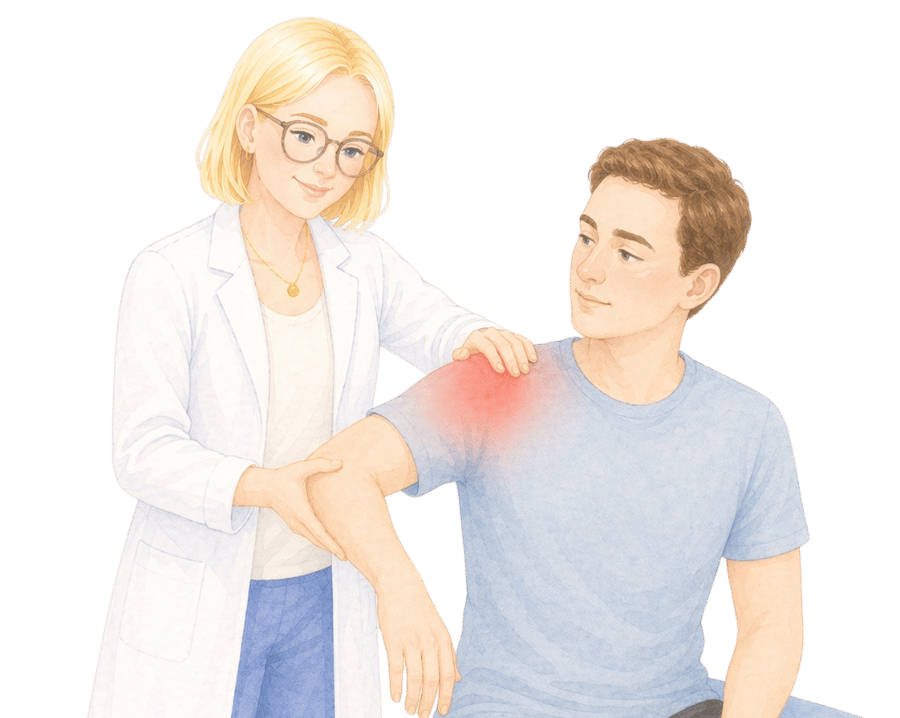
- The physical assessment involves looking at how the shoulder moves, testing the strength and function of the surrounding muscles, examining the neck and upper back, and identifying which structures are most likely involved. You will need to be able to expose the shoulder, so a loose-fitting top is practical.
After the assessment, Serena will explain her findings clearly and discuss what a treatment plan might involve. Hands-on treatment usually takes place in the same session, and you will leave with some guidance on what you can do to support progress at home.
Self-help for shoulder pain
There is usually something practical you can do to support shoulder recovery, whether you are waiting for an appointment or working through treatment. The right approach depends on your specific situation, but some general principles tend to be helpful:

Keep moving within comfort
Complete rest is rarely the best approach for shoulder pain. Brief periods of reduced load during a flare are reasonable, but prolonged immobility increases stiffness and can make recovery harder. Gentle movement within a comfortable, pain-free range is generally encouraged.

Adjust positions that consistently aggravate it
If carrying a bag on the affected side, sleeping in a certain position, or keeping the arm raised for extended periods reliably makes it worse, adjusting those habits while the shoulder settles is a practical first step.

Check your desk and screen setup
If your pain worsens after screen work, the position of your keyboard, mouse, and screen height are worth reviewing. A rough guide: elbows roughly at desk height, screen at eye level, mouse close enough to avoid reaching.

Return to load gradually after a flare
If your shoulder pain is linked to exercise or a physical job, abrupt changes in training volume or work intensity tend to be the most common trigger for flares. Gradual, progressive return to load once the acute phase has settled usually works better than extended rest followed by a sudden return to full activity.
These suggestions are general guidance only and are not a substitute for individual assessment. What works well for one person may not suit another.
Frequently asked questions
about shoulder pain in Ryde
We know starting something new can bring up a few questions — especially if it’s your first time seeing an osteopath. Below you’ll find answers to some of the most common things people ask us. If you’re still unsure about anything, don’t hesitate to get in touch — we’re here to help.
This varies considerably depending on the cause. Shoulder pain following overuse or a minor strain may settle within a few weeks with appropriate management. Frozen shoulder typically progresses through stages over months, though symptoms can be supported throughout. Rotator cuff-related pain can resolve well with treatment and guided rehabilitation, though timelines vary between individuals. Shoulder pain that has not improved after several weeks is worth getting assessed.
The two can feel similar but tend to present differently. Rotator cuff-related pain is often movement-specific: it flares with particular actions, especially lifting or reaching, while the shoulder generally retains a reasonable overall range of movement. Frozen shoulder is characterised by stiffness across all planes of movement, including restriction in what someone else can move your arm through, not just what you can do yourself. Accurate differentiation matters because the treatment approach differs. A clinical assessment is the most reliable way to distinguish between them.
In most cases, gentle continued movement within a pain-free range is better than complete rest. The shoulder tends to stiffen with prolonged immobility, which can make recovery harder. The exception is a significant acute injury: if the pain is severe, follows a traumatic event, or is accompanied by marked weakness, a brief period of reduced load and early clinical assessment makes sense.
Osteopathy can help with many presentations of shoulder pain, including rotator cuff-related pain, shoulder stiffness and impingement patterns, and pain referred from the neck or upper back. At Lind Street Osteopathy in Ryde, initial consultations are up to 60 minutes, allowing time for a thorough assessment of the shoulder and surrounding structures followed by treatment in the same session. Serena will explain clearly what is most likely contributing to your pain and what a treatment plan may involve.
Some discomfort during treatment is normal and expected, particularly when working with stiff or irritated tissue. Serena will work within your tolerance and adjust her approach depending on how the shoulder responds. Treatment for the shoulder does not need to be forceful to be effective. You should feel comfortable speaking up at any point during the session about how something feels.
Book an appointment in Ryde
If you would like to talk through whether this service is right for you, or if you are ready to book, Serena would be happy to hear from you.
- 07528 966206
- lindstreetosteopathy.co.uk
-
Lind Street Osteopathy
17 Lind Street, Ryde, Isle of Wight, PO33 2NQ
Lind Street Osteopathy is based in Ryde on the Isle of Wight. Serena sees patients from across Ryde and the wider island, including Bembridge, Brading, Seaview, Shanklin, Sandown, and Newport.
The clinic is situated in a Victorian townhouse in the heart of Ryde, at 17 Lind Street, Ryde, Isle of Wight, PO33 2NQ. It is easily reached from most parts of the island.