Degenerative Disc Disease: What It Really Means and Why It Does Not Always Cause Pain
Serena Johnson
June 16, 2026
Degenerative Disc Disease: What It Really Means and Why It Does Not Always Cause Pain
Being told you have degenerative disc disease can sound alarming. The word “disease” makes many people imagine a serious, worsening spinal problem. In reality, degenerative disc changes are very common and are often part of the normal ageing process.
Many people have disc changes on scans and experience little or no pain. Others may have significant back pain even when imaging does not show major structural change. This is why the scan result is only one part of the picture.
At Lind Street Osteopathy in Ryde, this is something we often discuss with people across the Isle of Wight who are managing recurring back pain, stiffness or concern after receiving scan results.
What Is Degenerative Disc Disease?
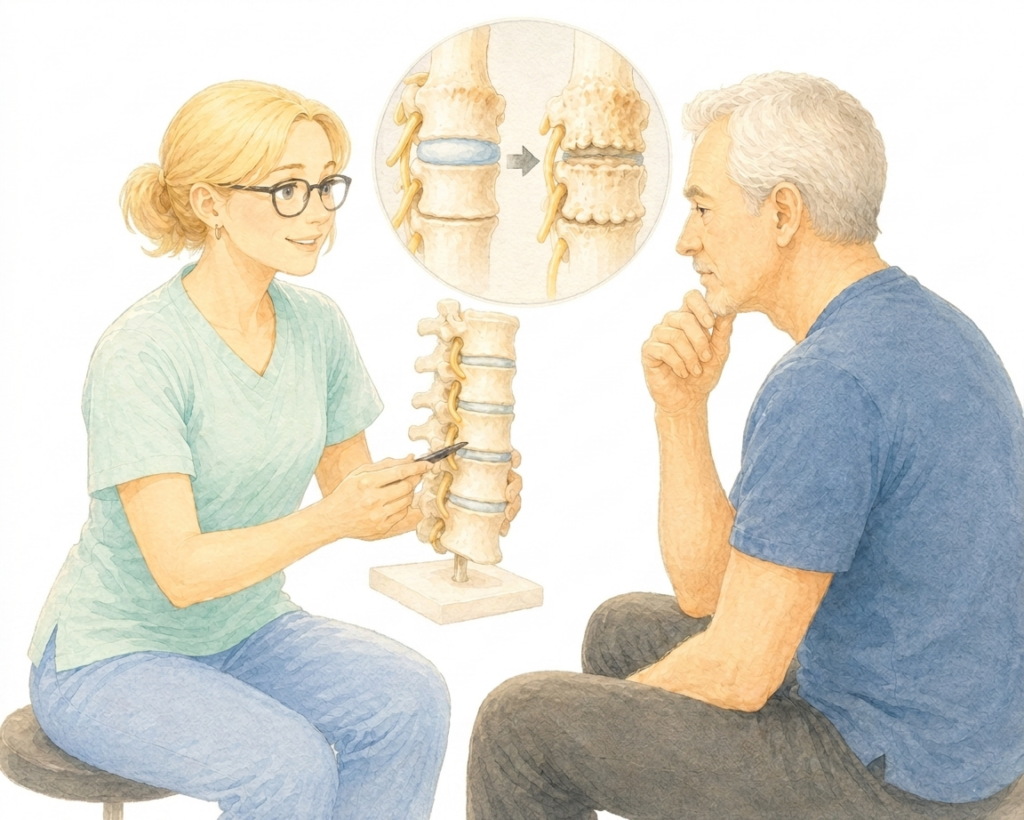
Over time, discs can lose water, become thinner, or develop small changes. For some people, this causes no symptoms. For others, it can be linked with:
- Back or neck pain
- Stiffness or reduced movement
- Pain that comes and goes
- Muscle tightness or spasms
- Pain that may travel into the arm or leg
- Symptoms that feel worse with sitting, bending, or lifting
Our
Newsletters
Sign up to receive simple tips, updates, and insights from the clinic — designed to help you feel better, move more freely, and take care of your health.
Degenerative Disc Disease: What It Really Means and Why It Does Not Always
Cause Pain
Being told you have degenerative disc disease can sound alarming. The word “disease” makes many people
imagine a serious, worsening spinal problem. In reality, degenerative disc changes are very common and are
often part of the normal ageing process.
Many people have disc changes on scans and experience little or no pain. Others may have significant back
pain even when imaging does not show major structural change. This is why the scan result is only one part of
the picture.
At Lind Street Osteopathy in Ryde, this is something we often discuss with people across the Isle of Wight who
are managing recurring back pain, stiffness or concern after receiving scan results.
Quick Answer: Is Degenerative Disc Disease Always Painful?
No. Degenerative disc disease does not always cause pain. Many adults have disc changes such as reduced
disc height or loss of hydration without significant symptoms. Pain is influenced by movement, strength, joint
function, lifestyle, sleep, stress and nervous system sensitivity, not just what appears on a scan.
What Are Intervertebral Discs?
The spine is made up of bones called vertebrae. Between many of these bones are intervertebral discs. These
discs help absorb load, maintain spacing between the vertebrae and allow the spine to move.
Each disc has a softer centre and a tougher outer ring. Over time, the discs naturally change. They can lose
some hydration, become less springy and reduce slightly in height. These changes are common as people get
older.
What Does Degenerative Disc Disease Mean?
Degenerative disc disease refers to age-related or load-related changes in the spinal discs. Despite the name,
it is not always a disease in the way people commonly understand that word.
It may involve reduced disc height, reduced hydration, changes in how the disc absorbs force, and altered
movement in the surrounding joints and soft tissues.
For some people, these changes are associated with pain or stiffness. For many others, they are simply scan
findings that do not cause major symptoms.
Why the Name Can Be Misleading
The phrase “degenerative disc disease” can create fear. It may make people think their spine is crumbling,
fragile or permanently damaged. That is rarely the most helpful way to think about it.
A more useful explanation is that the discs have changed over time. The important question is not only what the
scan shows, but how you move, what symptoms you have, what activities are limited, and whether there are
any signs that need medical referral.
Does Degenerative Disc Disease Always Cause Pain?
No. This is one of the most important points to understand.
Degenerative disc changes are common in people with and without back pain. A scan may show disc changes,
but that does not automatically mean those changes are the direct cause of your symptoms.
Pain can be affected by muscle tension, joint irritation, movement habits, deconditioning, poor sleep, stress,
fear of movement and previous injury. This is why two people with similar scan results can feel completely different.
Common Symptoms Linked with Degenerative Disc Changes
When symptoms are present, they may include lower back pain, stiffness after sitting, discomfort with bending
or lifting, flare-ups after activity, reduced flexibility and pain that refers towards the buttock, hip or leg.
Symptoms may come and go. Some people have short flare-ups that settle with movement and sensible
pacing. Others develop more persistent symptoms that benefit from assessment and a structured management
plan.
Why Scans Do Not Always Match Symptoms
Imaging can be useful in certain situations, but it does not always explain pain levels. Many scan findings are
common in people who are active and functioning well.
A scan is a picture of structure. It does not show how well you move, how strong your supporting muscles are,
how sensitive the nervous system has become, or how your daily habits are affecting your symptoms.
This is why a clinical assessment is often more useful than focusing only on the wording of a scan report.
What Can Contribute to Degenerative Disc Changes?
Several factors may contribute to disc changes over time. These include ageing, genetics, previous injuries,
smoking, reduced activity, repetitive loading, prolonged sitting, and general physical conditioning.
These factors do not guarantee that someone will have pain. They simply influence how the spine adapts over
time.
When Should You Seek Medical Advice?
Most back pain is not caused by anything serious, but some symptoms should be assessed promptly.
- New loss of bladder or bowel control
- Numbness around the saddle area
- Severe or worsening weakness in the legs
- Pain following significant trauma
- Unexplained weight loss, fever or feeling generally unwell
- Constant night pain that does not ease with position change
- Severe pain that is not improving or is becoming progressively worse
If any of these symptoms are present, it is important to seek urgent medical advice rather than relying on
manual therapy or exercise alone.
How Degenerative Disc Changes Are Assessed
A good assessment should look beyond the scan report. It should consider your symptoms, history, movement,
strength, daily activities and goals.
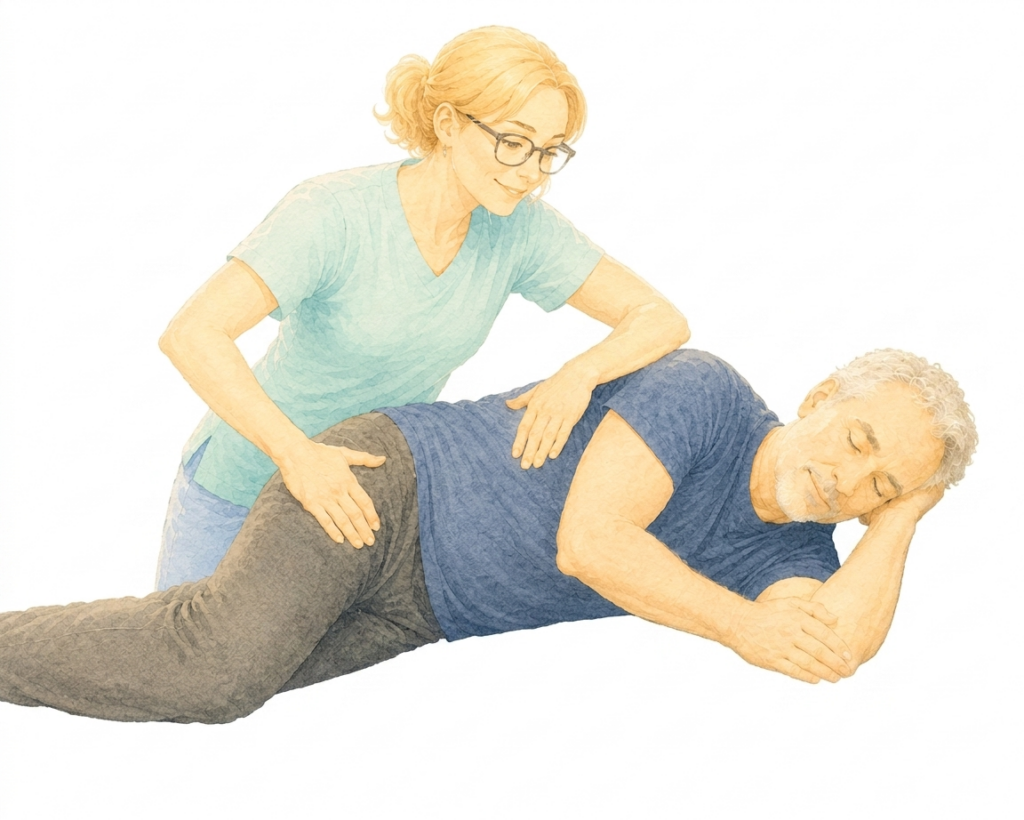
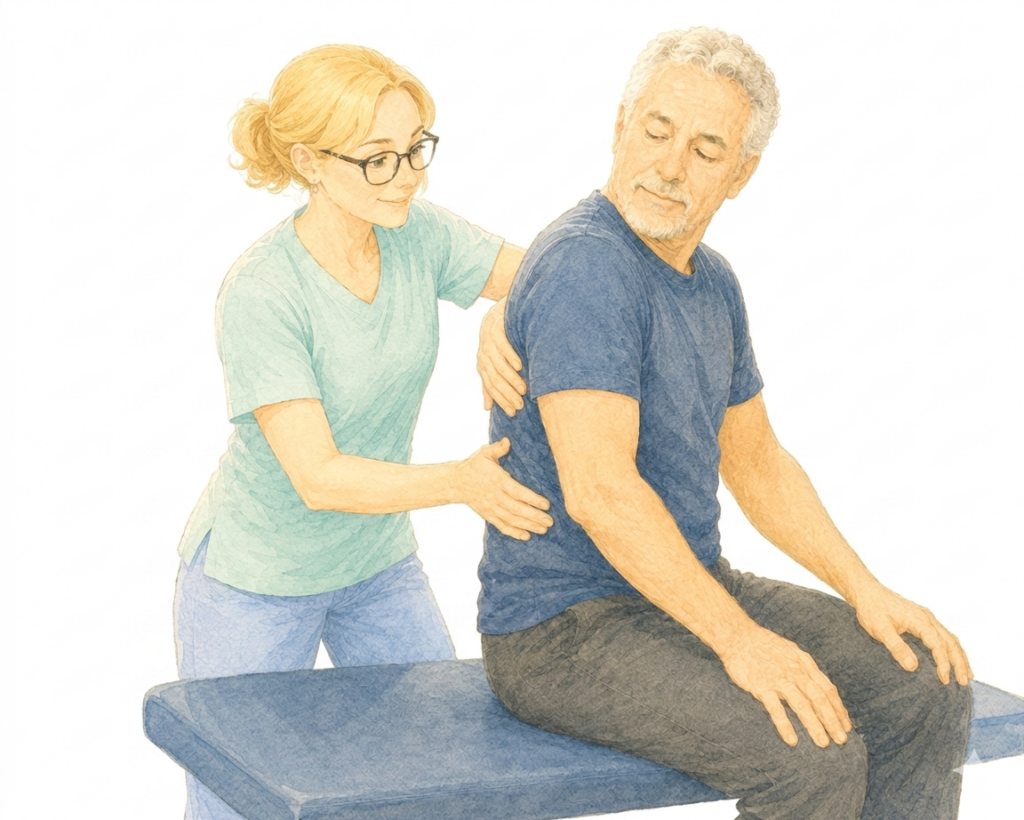
At an osteopathy appointment, this may include a discussion about your pain pattern, observation of posture
and movement, hands-on examination of the spine and surrounding areas, simple movement tests, and
neurological screening where appropriate.
If your symptoms suggest something outside osteopathic care, referral to a GP or another healthcare
professional may be recommended.
How Osteopathy May Help with Degenerative Disc Changes
Osteopathy does not reverse structural disc changes. The aim is to help improve function, reduce stiffness,
ease muscular tension and support more confident movement.
Care may include gentle manual therapy, advice on movement and pacing, exercises to support strength and
mobility, postural guidance where relevant, and strategies to reduce flare-ups.
Treatment should be tailored to the person, not just the scan result. Two people with the same diagnosis may
need very different approaches.
Managing Degenerative Disc Changes Day to Day
For many people, the most helpful approach is active and conservative. This means staying mobile, building
strength gradually and avoiding long periods of complete rest unless medically advised.
- Walk regularly within comfortable limits
- Break up long periods of sitting
- Build strength gradually rather than suddenly increasing activity
- Use pacing during flare-ups
- Avoid fear-based avoidance of normal movement
- Prioritise sleep, recovery and general fitness
The goal is not to protect the spine from all movement. The goal is to help the spine tolerate normal life again.
Getting Help with Back Pain in Ryde and Across the Isle of Wight
If you are living with ongoing back pain, stiffness or worry after being told you have degenerative disc changes,
a personalised assessment can help make sense of your symptoms.
Lind Street Osteopathy is based in Ryde and provides evidence-informed osteopathic care for people across
the Isle of Wight. The focus is on understanding what is contributing to your pain and helping you move with
more confidence.
Key Takeaway
Degenerative disc disease is common and does not automatically mean your spine is damaged or that your
pain will get worse. Scan findings matter, but they are only one part of the story.
With the right assessment, reassurance, movement advice and treatment plan, many people with degenerative
disc changes can stay active and manage symptoms well.
Frequently Asked Questions
Is degenerative disc disease serious?
Not usually. It is often a common age-related finding. Some people have symptoms, while others have disc changes without significant pain.
Can degenerative discs heal?
The structural changes themselves may not fully reverse, but pain and function can often improve with the right management.
Does degenerative disc disease always get worse?
No. Symptoms often fluctuate. Many people remain stable or improve with appropriate activity, reassurance and care.
Can osteopathy help degenerative disc disease?
Osteopathy may help by improving mobility, reducing muscular tension and supporting better movement. It does not replace medical care where referral is needed.
Should I avoid exercise if I have degenerative disc disease?
In most cases, gentle and progressive movement is helpful. Exercise should be adapted to your symptoms and increased gradually.