
Why Does Stress Make Pain Feel Worse?
Serena Johnson
November 2, 2026
Understanding the relationship between stress, muscle tension, sleep and pain sensitivity
Stress is something we all experience from time to time. Whether it’s related to work, family responsibilities, personal circumstances or everyday pressures, periods of stress can affect both our mental and physical wellbeing.
Have you ever noticed that your neck and shoulders feel particularly tense during a busy week? Or perhaps an existing ache becomes more noticeable when you’re feeling overwhelmed?
This isn’t necessarily a coincidence.
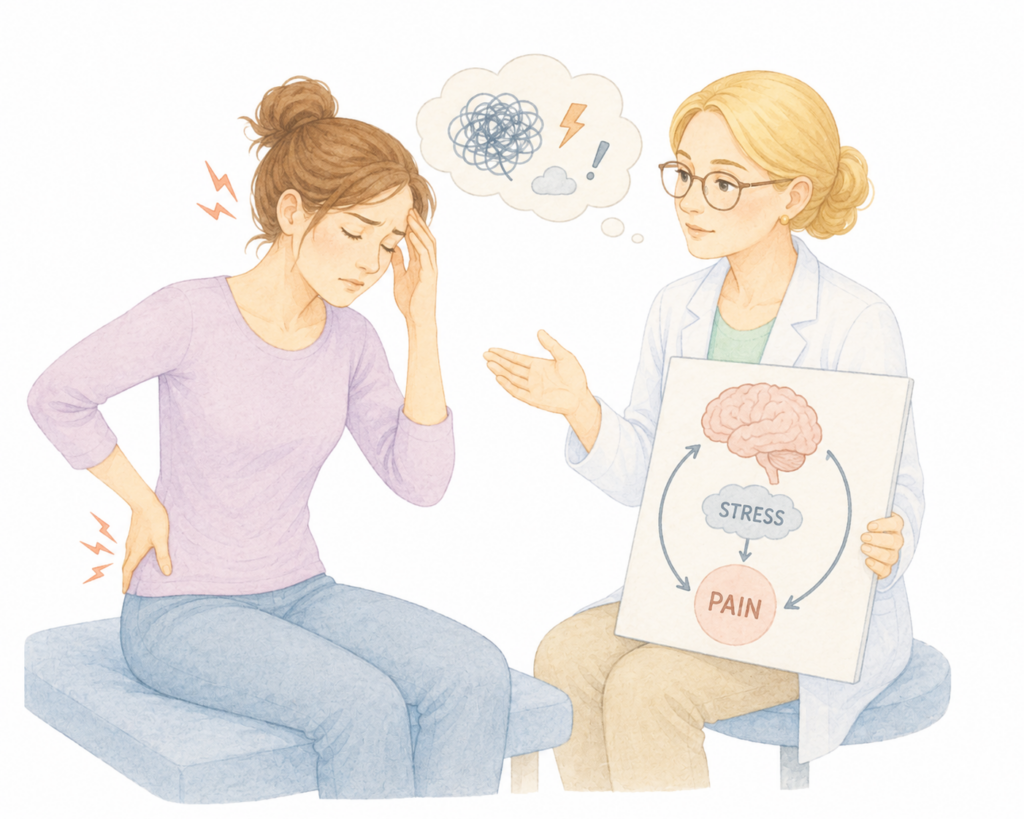
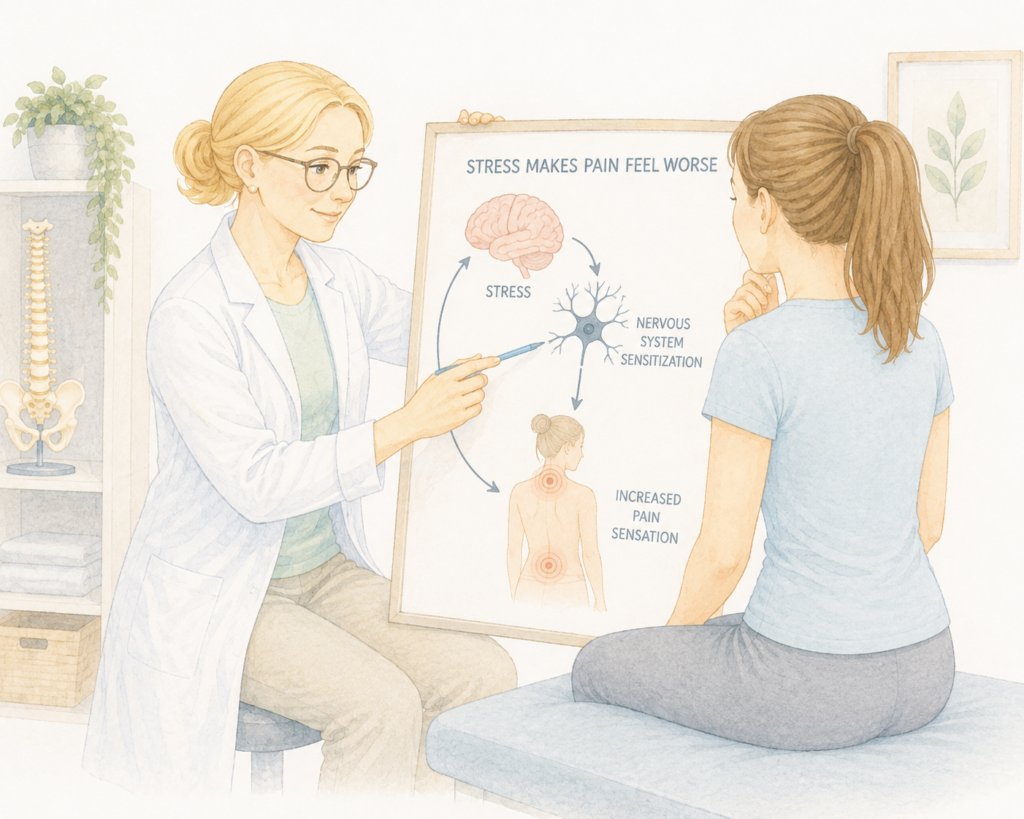
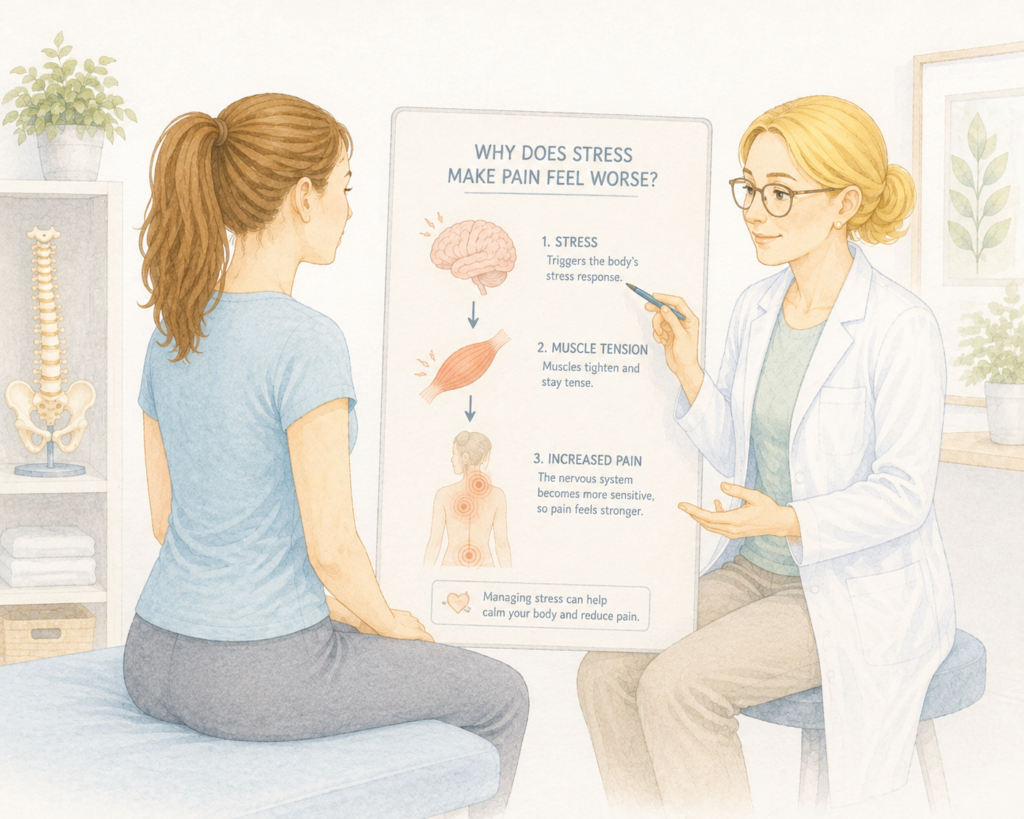
Stress can influence how we experience pain, affecting muscle tension, sleep quality and the way our nervous system responds to physical sensations.
Understanding this relationship can help explain why musculoskeletal symptoms sometimes fluctuate, even when there hasn’t been an obvious injury.
Our
Newsletters
Sign up to receive simple tips, updates, and insights from the clinic — designed to help you feel better, move more freely, and take care of your health.
How Does Stress Affect the Body?
When we experience stress, our body activates its natural stress response, often referred to as the fight-or-flight response.
This involves the autonomic nervous system and the release of hormones, including adrenaline and cortisol, which help prepare the body to respond to a perceived challenge or threat.
During this response, several physical changes can occur:
- Heart rate and breathing may increase.
- Muscles may become more tense.
- Attention and alertness can increase.
- Digestion and sleep may be affected.
These responses are normal and can be helpful in the short term.
However, when stress becomes prolonged, it can contribute to ongoing physical tension, fatigue and changes in pain sensitivity.
Importantly, stress affects everyone differently. Some people experience headaches or muscular discomfort, while others notice changes in their sleep, digestion or energy levels.
Why Does Stress Cause Muscle Tension?
One of the most recognisable physical effects of stress is increased muscle tension.
When we’re stressed, muscles may contract as part of the body’s protective response.
This can be particularly noticeable around the neck, shoulders, jaw and upper back.
For example, during a demanding day at work, you might find yourself raising your shoulders, clenching your jaw or remaining in one position for longer than usual.
Over time, these behaviours may contribute to muscular discomfort or feelings of stiffness.
However, muscle tension doesn’t always mean that a muscle is damaged or physically shortened.
The sensation of tightness can be influenced by several factors, including activity levels, fatigue, nervous system responses and individual pain sensitivity.
This is one reason why stretching alone doesn’t always provide lasting relief from muscular discomfort.
Can Stress Make Existing Pain Worse?
Yes. Stress can influence the intensity of pain, including pain associated with an existing musculoskeletal condition.
Pain is a complex experience produced by the nervous system in response to information from the body and its wider environment.
Although pain often serves an important protective purpose, its intensity isn’t determined solely by the amount of tissue damage present.
Our nervous system continually processes information relating to physical sensations, previous experiences, emotions, sleep and perceived threats.
During periods of increased stress, these processes can change, sometimes making existing discomfort feel more intense or difficult to manage.
For example, someone experiencing ongoing lower back pain may notice that their symptoms become more troublesome during a particularly stressful period.
This doesn’t necessarily mean their back has sustained a new injury.
Equally, it doesn’t mean that the pain is imaginary or simply caused by stress.
Pain is a real physical experience, and stress is just one of several factors that may influence it.
The Relationship Between Stress, Sleep and Pain
Sleep plays an important role in our physical and emotional wellbeing.
Unfortunately, stress can make it more difficult to fall asleep, stay asleep or feel refreshed in the morning.
You might find yourself thinking about work, worrying about responsibilities or struggling to switch off at the end of the day.
Poor sleep can, in turn, influence how the nervous system processes pain.
Research has demonstrated a relationship between sleep disturbances and increased pain sensitivity.
This means that after a poor night’s sleep, aches and discomfort that would normally feel manageable may become more noticeable.
Pain itself can also disturb sleep, creating a cycle in which discomfort and poor sleep reinforce one another.
For people experiencing persistent musculoskeletal symptoms, addressing sleep difficulties can therefore be an important part of a broader management approach.
What Is Pain Sensitivity?
Pain sensitivity refers to how readily and intensely we experience painful sensations.
Our nervous system doesn’t respond to physical information in exactly the same way all the time.
Factors such as sleep, stress, previous experiences, inflammation and general health can influence how pain is processed.
In some circumstances, the nervous system can become more responsive to potentially painful stimuli.
This is sometimes described as increased pain sensitivity.
For example, an activity that usually causes little discomfort might feel more painful during a period of poor sleep or heightened stress.
However, this doesn’t mean that every increase in pain is caused by nervous system sensitivity.
New, persistent or worsening symptoms may still require clinical assessment to identify other possible causes.
Can Stress Contribute to Persistent Pain?
Stress can be one of several contributing factors in persistent pain.
Persistent pain is generally defined as pain lasting longer than three months.
Unlike acute pain, which is often associated with a recent injury or illness, persistent pain can involve a more complex interaction between physical, psychological and social factors.
This is sometimes described as the biopsychosocial model of pain.
It recognises that pain can be influenced by several interconnected factors, including:
- Physical health and previous injuries.
- Activity levels and physical capacity.
- Sleep and fatigue.
- Stress and emotional wellbeing.
- Social circumstances and everyday responsibilities.
- Nervous system processing.
This approach doesn’t suggest that pain is purely psychological.
Instead, it acknowledges that pain is a complex experience and that effective management may involve addressing several contributing factors rather than focusing on one structure or muscle.
How Can You Manage Stress-Related Muscle Tension and Pain?
Although stress cannot always be avoided, there are practical strategies that may help support both physical comfort and general wellbeing.
1. Keep Moving Regularly
Gentle, regular physical activity can support musculoskeletal health and emotional wellbeing.
Activities such as walking, swimming, gardening or other enjoyable forms of movement may help reduce feelings of stress while maintaining strength and mobility.
You don’t necessarily need an intense exercise routine to experience benefits.
The most appropriate activities will depend on your individual health, abilities and preferences.
2. Prioritise Sleep
Establishing a consistent sleep routine may help improve sleep quality.
This could include maintaining regular bedtimes, reducing stimulating activities before bed and creating a comfortable sleeping environment.
If pain is affecting your sleep, experimenting with pillows or supported sleeping positions may also help improve comfort.
Persistent sleep difficulties are worth discussing with your GP.
3. Take Regular Breaks
During busy or stressful periods, it’s easy to spend long periods sitting at a desk or concentrating on one task.
Taking short breaks to stand, walk or change position may help reduce discomfort associated with prolonged inactivity.
There isn’t one perfect posture that everyone needs to maintain.
Often, finding comfortable positions and varying them throughout the day is more useful than trying to sit or stand rigidly.
4. Try Relaxation Techniques
Relaxation strategies may help reduce feelings of stress and physical tension.
Some people find slow breathing exercises, mindfulness, gentle movement or spending time outdoors helpful.
Others prefer reading, listening to music or making time for hobbies.
The important thing is finding something that feels manageable and enjoyable for you.
5. Build Strength and Physical Confidence
Where appropriate, strengthening exercises can help improve physical capacity and confidence with movement.
This may be particularly useful when discomfort has led someone to reduce their activity levels.
Exercises should be tailored to individual needs and progressed gradually.
6. Seek Support When Needed
If stress is becoming difficult to manage or is significantly affecting your daily life, speaking with your GP or an appropriate mental health professional may be beneficial.
Similarly, persistent or worsening physical symptoms shouldn’t automatically be attributed to stress without appropriate assessment.
Can Osteopathy Help With Stress-Related Muscle Tension?
Osteopathy focuses on the assessment and management of musculoskeletal conditions.
Although osteopathy doesn’t treat stress itself, osteopathic care may have a supportive role for some people experiencing associated muscular discomfort.
At Lind Street Osteopathy, assessment considers not only the area of discomfort but also factors that may be contributing to symptoms.
These can include activity levels, physical demands, sleep, previous injuries and general wellbeing.
Depending on the individual’s presentation, management may involve:
- Appropriate manual therapy for musculoskeletal discomfort.
- Advice on movement and activity modification.
- Individualised exercises to improve strength and physical function.
- Education about pain and factors that may influence symptoms.
- Guidance on self-management strategies.
Manual therapy may provide short-term symptom relief for some people, but it isn’t a treatment for the underlying causes of psychological stress.
For persistent pain, osteopathy is best considered as one possible component of a broader, individualised management approach.
When Should You Seek Advice About Pain?
Although stress can influence pain, it’s important not to assume that every ache or new symptom is stress-related.
If you’re experiencing persistent, unexplained or worsening pain, an appropriate healthcare professional can help assess your symptoms.
Urgent medical assessment is particularly important if pain is accompanied by concerning symptoms such as new or progressive weakness, significant neurological changes, or new bladder or bowel dysfunction associated with back pain.
Sudden severe chest pain or other potentially serious symptoms also require urgent medical attention.
Understanding the Bigger Picture
Stress and pain are closely connected, but the relationship isn’t always straightforward.
Periods of stress can influence muscle tension, sleep quality and pain sensitivity, potentially making existing symptoms more noticeable.
However, this doesn’t mean that stress is always the cause of pain or that physical symptoms should be dismissed.
Understanding the different factors that contribute to pain can help people develop a more balanced approach to managing their symptoms.
Regular movement, adequate sleep, appropriate exercise and stress-management strategies can all play a role in supporting physical wellbeing.
Looking after your musculoskeletal health involves more than focusing on individual muscles and joints. It also means recognising the wider factors that influence how your body feels and functions